Sunday, May 29, 2011

The Lovely Kanapaha Botanical Gardens In Gainesville, Florida

A couple of posts ago, I mentioned that Mark and I had visited the Kanapaha Botanical Gardens in Gainesville, Florida for the first time after dropping some paintings off at Paddiwhack. The gardens are well-established and extensive without requiring miles of walking to see various types of gardens and natural environments. In fact, one can see most of the gardens with less than two miles of strolling. The natural features include a view out over a large lake, so lush with vegetation that it's hard to see, and the Kanapaha Prairie beyond it, in a long view from a high point (at least high for Florida :>) in one of the photos.
Other photos show the hummingbird garden, with gazebo and some bright red flowers and an interesting fallen tree that forms an archway over the path.
I am glad to be posting again after traveling to Charlotte, NC to help a friend who will be relocating there. When I returned and tried to sign in, Blogspot seemed to be experiencing difficulties. It took a couple of days and some work to reestablish and post on this blog. Soon, I will be visiting your blogs as well, now that we (I hope) are up and running again.
I hope all readers in the United States are enjoying a relaxing, yet meaningful, Memorial Day weekend as we honor and remember all those who have served us and our country in the past, as well as the many Americans currently serving us in military service. Our gratitude is sincere and profound.

Friday, May 20, 2011

New Painting Exhibit at Paddiwhack in Gainesville, Florida

I know I said that I would post my new flyer next, but couldn't resist showing you this lovely display of eight of my coastal North Florida landscape paintings. I am thrilled with the grouping the owner mounted Wednesday afternoon in the prime exhibit area of Paddiwhack in Gainesville, Florida. The photos (double click to enlarge) also give you a small glimpse of the wonderful, eclectic collection of goodies sold in this fine shop.
Mark and I dropped the paintings off early Wednesday afternoon, then had a glorious, fresh, well-seasoned lunch (we LOVE breakfast-all-day places) at The Flying Biscuit Cafe a few doors down in the same strip mall. We spent a couple of fun hours at the Kanapaha Botanical Gardens--which I must show-and-tell about in another post soon.
As we had done in our visit a few months ago (see 1/31/11 post), we brought a chilled bottle of good wine in a cooler and purchased lovely cheese at The Fresh Market next door to Paddiwhack, a rosemary baguette and a couple of other goodies at the Upper Crust Bakery down the row. I'm telling you, this particular strip mall has terrific stores (feel so privileged to have my paintings in this popular Gainesville, Florida spot!). We joined my beloved painting mentor, Linda Blondheim, in her studio/showroom loft up in the back of Paddiwhack for wine, gourmet snacks, and good conversation.
By the time we returned to meet Linda, the owner had hung my paintings. They will show here for six weeks, through the end of June. The top photo shows six of the pieces on a side wall just to the right as customers enter the store. In the second photo, you can see a two more, one on a blue partial wall just before the large main section of the store, and the other on the back of a piece of furniture which faces into the shop. The small honey-colored frame standing on a chest in the corner displays the artist's statement I showed you last time with my business cards on a pottery stand next to it. The flyers I made for the occasion are on the highboy beneath the six pieces. This show is an amazing opportunity, for which I am very grateful.
Question of the day: Isn't life astonishing sometimes? How did I get here from taking a painting course just for fun not too many years ago?!?

Tuesday, May 17, 2011

New Artist's Statement--Landscape Paintings in a Gainesville, Florida Shop

Tomorrow, we will deliver a collection of eight landscape paintings to Paddiwhack, a delightful shop in Gainesville, Florida. I have been working hard to prepare the pieces for the exhibit; they will hang in a featured nook in the front of the store for six weeks. Two new publicity pieces are also ready, a flyer for people to pick up, which I will show you in the next post, and this framed artist's statement. You should be able to click on it to make it larger.

Friday, May 6, 2011

Details of New Painting and More About the Painting Process

The Lyons Club Park Boardwalk painting got off to a decent start in terms of composition, but some other aspects of the process were unsatisfactory at first and required revision. For those of you interested in the painting process, that is the topic today. The photos are close-up detail shots of the new painting I showed you last time as well as a photo of the entire piece.
As I mentioned last post, I shifted the viewpoint a bit from the reference photo, but you could see that I retained the basic elements of the scene without radical change. I raised the horizon line, which often seems to land in the horizontal center of my photos, because a painting should (almost) never be cut in half by a major element or line. I made small, grey-tone sketches of several possible compositions to consider and gridded over them horizontally and vertically into thirds (resulting in nine smaller rectangles). I try to place my focal point near the intersection of two of these lines, which is pleasing to the eye (these are sometimes called "sweet spots"). In this piece, I regard the center of interest as the area in the upper left third where a single tree stands and the boardwalk comes to a point and makes a sharp turn to follow the river bank. That is such a compelling angle that the viewer's eye is inevitably led there. But I include a path over to the right and then visual paths up, down, and around so that the viewer's eye will naturally move through the entire composition and find other areas of visual interest as well.
I thought I had chosen a perfect palette for this painting, but needed to change it along the way. I use a limited palette for each work, meaning a selection of certain tube colors which will blend well to create the entire range of color variations for the scene. Even though the viewer may not notice the use of a limited palette, the result is more pleasing and harmonious than using many randomly chosen colors would be. The palette I choose varies with the subject, weather, and season. This painting has no tube green at all; greens are blended from blues and yellows, and modified with red, purple and grey. After one change, the final palette consisted of cerulean blue, cobalt blue, paynes grey, dioxizine purple, cadmium yellow light, yellow ochre, cadmium red light, buff, and white. Although the photo is almost entirely in greens and blues, I wanted a livelier scene and added shades of purple in the water. Then, I used burnt sienna (a favorite color) to add a range of tones in the marsh grasses. This was a mistake, in my opinion. The burnt sienna did not blend well with the blues and purples I had used, so I put it back in the drawer and experimented with other shades for the grass. Some of our North Florida marsh areas include a sort of brownish burgundy grass that seemed likely to fit in, so I worked that into various spots in the grass along with some buff and greenish blends. This particular burgundy is a blend of cad red light, paynes grey, and a little purple (used with care--the purple is strong).
This painting came together a bit more quickly than sometimes (I am a sloooow painter). If you have any other questions about the painting process, please feel free to ask either in a comment or to email me (see profile for address). I enjoy sharing "shop talk" with interested readers.
Question of the day: What aspects of the painting process (if any) are of interest to you?

Wednesday, April 27, 2011

New Painting--Lyons Club Park Boardwalk on the St. Johns River

Join me on a spring walk in Lyons Club Park along the St. Johns River in Jacksonville, Florida. This new painting is nearly finished, but rather than waiting to post it, I decided to show it to you today. The revisions I still plan to make are so minor that the differences are unlikely to be noticeable in a blog photo. The piece is a 16" X 20" acrylic painting on gallery wrapped canvas, so can be hung without a frame. The scene wraps around the painted edges.
Today, I am showing you the painting and one of the reference photos I used. Next post, I will include some close-up photos of details in the painting and more information about the painting process.
You can see that I departed from the reference photo in terms of the viewpoint, the palette (colors), and some other details. The painting's viewpoint is a bit further away at a higher point along the walk by the marshy river bank.
Among the Jacksonville area's many lovely parks and preserves, Lyons Club Park is a well-kept jewel. Birds sing along wooded trails, and fish and other water creatures are abundant. We saw a number of people fishing along the bank while others paddled up to shore in canoes and kayaks. The water currents are varied and interesting as the St. Johns River runs straight north (unusual in the Northern Hemisphere) just before it turns east to flow to the ocean. We are on the east bank of the river looking north. The Trout River flows in from the west (out of sight from this view), and both rivers rise and fall with the ocean tides. So, the water is almost always in motion--sometimes lazy and sometimes powerfully choppy. Ripples and waves can run in nearly any direction, changing throughout the day, and sometimes swirling in eddies caused by the confluence of outgoing rivers meeting an incoming tide. It's a perfect place for a refreshing and renewing walk.
Question of the Day: Does your area treasure and preserve its natural habitats and beauty?

Thursday, April 14, 2011

Quick, Easy, Lean Pork Stir-fry Recipe & Cooking Tips

Today, I made a quick and easy, lean pork stir-fry for the two of us and thought you might enjoy the recipe and some cooking tips. It's a bit of an exaggeration to call this a recipe given how simple it is--but it is healthful and delicious.
Although I love cooking with fresh fruits and vegetables and making my own sauces, etc. from scratch, sometimes I want to make something truly quick and easy with less chopping and fussing. Especially now that we are back to just the two of us and have lots of other creative, interesting things to do, I want some evening meals to be quick and easy.
I served this stir-fry on basmati rice, a very light, fluffy alternative to our family's usual brown rice. One warning, though--this rice is extra "foamy" as it cooks. Even though I thought I was watching it carefully, it boiled over at one point--something I have done before. Use an extra-deep pot for basmati rice (yes, I'll try--once again--to remember that :>). Also, it sometimes cooks more quickly than the package instructions indicate; if it starts to stick, just take it off the stove and keep it covered until it is fluffy and the water is absorbed.
Start the rice first; it will be done about the same time as the stir-fry. A couple of my favorite kitchen tips follow the recipe.
QUICK & EASY PORK STIR-FRY FOR TWO
2 small boneless pork chops (6 or 7 ounces total) or other lean pork
1 Tblsp. or more chopped, fresh ginger root (see tip below)
canola oil & sesame seed oil
bottled stir-fry sauce (I used Kikkoman brand)
1/2 large onion, or to taste
16 oz. bag frozen stir-fry vegetables (I used Walmart's Great Value brand, sugar snap pea stir-fry vegetables--they are quite good)
1. Trim fat off pork, if desired, and cut into small pieces (maybe 1/2" square) or strips. In small bowl, stir pork together with chopped ginger root and a moderate amount of stir-fry sauce (I don't measure, but probably used about 2 Tblsp.). Set aside while you do step two.
2. Chop or sliver the onion. Heat oil in medium sized skillet or wok. I use a combination of maybe a tablespoon of canola oil and a teaspoon of sesame seed oil (see tip below). Saute onion lightly, about 2 minutes.
3. Add pork mixture to skillet (with more oil if needed), and saute over medium-high heat until pork is done through--about 4 or 5 minutes. Let it brown a little and stir often.
4. Again, add a dash of sesame oil and pour frozen vegetables into skillet. Pour a couple more tablespoons of stir-fry sauce over--more if you wish. Saute, covered at first, then without cover, stirring off and on, until vegetables are heated through and crisp-tender. This only takes a few minutes--don't overcook them.
5. Serve over rice. Fresh fruit is a delicious accompaniment.
One photo above illustrates some simple tips from my kitchen. Even when our boys were home, and we needed to pinch pennies on the food budget, I splurged on a few high-flavor ingredients. A small bottle of Sesame Seed Oil is well worth its cost and lasts a long time. Combined with another vegetable oil (I use it with canola oil in Asian style cooking), it adds a real flavor punch without destroying our goal of keeping saturated fats very low.
We also love fresh ginger root in any number of dishes, but find that it shrivels and goes bad before we finish even one long "knob". So, the first time I use part of a new piece, I quickly slice the rest into "coins", maybe 1/4" thick (no need to peel) and freeze them in a small zip bag. Then, we are never without, and nothing is wasted. Even straight out of the freezer, it is simple to peel and chop the amount you need for a recipe. If the coins stick together, hold under cool running water for a few seconds to separate.
Question of the day: What are your favorite quick meals or cooking tips?

Tuesday, April 5, 2011

Another Sign of Northeast Florida Spring--Flocks of Goldfinches

Each year, once in the fall and once in late March or early April, we enjoy flocks of migrating goldfinches and smaller numbers of other finches in our coastal North Florida yard. Sometimes, they stay in the area a few weeks; other times, they are here (at least in our yard) only a few days. We felt privileged to be home a few days ago to watch a flock in our backyard. Because they swoop in and out quickly and flit around, it was difficult to count them, but we had somewhere around 30 goldfinches that afternoon--possibly more. About 1/3 of them were males. Their song is sweet, long, and canary-like--a lovely spring chorus.
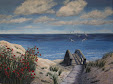
Finches love the thistle seed feeder we keep out for them and were also happily cracking the larger safflower seeds in the companion feeder. Most of all, they delighted in wildly splashy communal baths in the shallow birdbath at ground level. With trees, vines, and bushes nearby for safety, they seemed to feel free to frolic and sing up a noisy storm of joy. In my birdbath photos, some of the goldfinches are a fluffy blur of splash while others prepare to chase them out for their own turn.
I didn't dare open a door or window or step around to the back to get photos, so the best I could do was to give my simple little Canon its maximum 4X zoom and shoot through the patio door windowpanes. I hope you enjoy our cheery friends, too.
Question of the day: Don't you marvel at the beauty and variety of life on our precious Earth?

Saturday, March 26, 2011

The Beauty of Spring--A Blossoming Fringetree

Here in coastal North Florida, our azaleas are already dropping petals, and the wonderful flowering bulbs I grew up with in Michigan, like tulips and daffodils, do not flourish. However, we are enjoying our second round of spring flowering. I hope that wherever you are (except for my southern hemisphere friends, that is :>), you are beginning to see signs of spring emerging.
When we added a cutting garden of strictly native plants last year, the fringetree a landscape designer recommended was past its blooming time of the year. Given his description and the pictures in our North Florida native plants books, we eagerly looked forward to seeing our little fringetree sapling in bloom this year. It has truly exceeded our expectations, with bright white clusters of fragrant, wispy hanging blossoms that almost seem to glow against darker green foliage behind them.
For those interested, Gil Nelson, in Florida's Best Native Landscape Plants, describes this as a slow growing small tree which can live over 50 years and is "among the most trouble-free small landscape trees". It also bears a blue, olive-like fruit that attracts birds. According to Nelson, although it is most often seem in traditional southern landscapes, its range extends from Pennsylvania and New Jersey on down to North Florida and west into Texas. The botanical name is Chionanthus virginicus. Perhaps some of you are familiar with this tree; it is a completely new delight for me.
Question of the day: What are your favorite spring flowers or flowering trees? Are you seeing signs of spring where you are?

Thursday, March 17, 2011

Beautifully Restored Native American Mission--Mission San Xavier in Tuscon, Arizona

While we were in the Tuscon area, we and our friends visited Mission San Xavier, a lovely old Catholic mission on what is still a Native American reservation. Restoration work on this National Historic Landmark seemed nearly completed, and it is stunning. Constructed in a Spanish Colonial Baroque style in the late 1700s, the church still carries on an active worship and community service ministry. Decorated and gessoed sculptures and wall paintings glow in the cool interior, although the angle of the sun made photography challenging while we were there--some areas too bright and sun-washed and others too dark. A couple of my interior photos are clear enough to show you the color, painstaking detail, and interesting subject matter (a blend of Biblical and colonial themes) of the sanctuary and masonry, dome-like vaults. Another photo shows some of the native plant landscaping near a small side chapel. Inside the chapel, memorial icons and pictures, some quite recent and some very old, honor those who have been buried from this church, as the sight and scent of many dozens of candles quiet visitors who pause inside.
Question of the day: Have any of you participated in restoration work? I think it must be fascinating.
Thank you to all of you who continue to visit. I apologize that circumstances continue to make my posting less frequent that I would like, and I am grateful for your understanding.

Tuesday, March 8, 2011

Enjoying a Radical Change of Scenery--Visiting Tuscon, Arizona

We recently returned from a visit to friends who winter north of Tuscon, Arizona--the first time I had seen any part of that state south of the Grand Canyon. It would be difficult to imagine a more radical change of scenery from our lush, water-rich coastal North Florida home than this area. Stately Saguaro cacti, every one branching differently, tower over most of the dry vegetation (at least it was very dry in early March). Prickly pear flourish, with paddles in yellow and even purple as well as green. Rough mountain ranges rise several thousand feet above the already high desert landscape.
Our friends treated us to some of their favorite sights, including a drive up Mount Lemmon and a visit to a local park that featured native plants in a natural setting. The photos represent a small sample of the interesting vistas in these two attractions. Later, I will post photos of a visit to a beautiful old mission.
Although I love the ocean, rivers, creeks, swamps, and salt marshes in our home area, the desert has always fascinated me. The unique life forms that adapt to conditions in all the various types of deserts I have visited are amazing--though it requires patience and deep quiet to spot the animals. However, I must confess that it is difficult for me to imagine living or staying long-term in this arid land. We happily drank in the green, green sights of home after our journey.
Question of the day: Do you also return home from travel more grateful for home than ever?

Monday, February 28, 2011

Exploring--Off the Beaten Track for Painting Subjects

Last post, I showed you a 2009 visit to Kingsley Plantation in the Timucuan Preserve, here in Jacksonville, Florida. Today's photos are from our visit to the plantation with out-of-town friends a couple of weeks ago on a pleasant, bright day. After viewing the ruins of the slave cabins, the buildings, and exhibits, we wandered the extensive property. I am always drawn to water, so took a trail by the river, where views of marsh grasses and small islands added charm to the view.
I took a number of photos, as I usually do in interesting coastal North Florida areas, hoping that some will provide inspiration for landscape paintings in the future. In addition to photos that might, with cropping and a few adjustments, become the basis for a painting, I take various photos to help me remember details. The bark or leaves of a particular tree, the mud at the edge of a river, a close-up of salt marsh grasses, a cloud formation, or any number of other details can provide the information I need back in the studio. Without good photo records, studio painting would be guesswork and would not result in the kind of expressive, yet representative, landscapes I like to paint. Of course, not every painter works this way, and many wonderful paintings evolve by other methods. But, for me, "making it up" does not produce the kinds of interpretations of actual locations in our beautiful area that I try to paint.
You may enjoy imagining how you would use these photos in a painting. The view of the path is intriguing, but lacks the variation in color and in lights and darks a painting needs. Guess I'd imagine more breaks in the trees on the left to add more sunny patches on the shadowed walk, then intensify the drama of the bright area where the trail curves out of sight with sunlit tree trunks and foliage. The river view has multiple possibilities; one would be to use a 6" x 12" canvas I have and paint a narrow panoramic view.
Question of the day: Do you, too, find yourself captured by a scene off the beaten path that other people might pass without noticing?

Friday, February 25, 2011

Exploring--Right Near Home--Kingsley Plantation

Within the Timucuan Preserve on the northern edge of Jacksonville, Florida, an immense cluster (more than 98,000 acres altogether) of preserved natural and historical sites, stands a well-preserved former sea island cotton plantation with some surprises in its history. Kingsley Plantation nestles beside extensive salt marshes and passages out to the sea and to navigable rivers. In fact, ships from England could follow waterways straight to Kingsley's dock to deliver goods and load precious sea island cotton for the voyage back.
This free attraction, run by the National Park service, is accessible by road, boat, canoe, or kayak. The house and kitchen buildings (currently closed for renovation) are smaller and simpler than some of the grand old plantations you may have visited in places like Virginia. But, like those Virginians, Kingsley's owners owed their prosperity to the slave labor of countless individuals. In one of the photos, you can see the remains of slave cabins (24 of the original 32 are visible, arranged in a semi-circle) that were built of tabby. Tabby is a concrete material made of sand, water, and lime extracted from shells, mixed with whole shells and pieces, which was widely used for building in the coastal South. Another photo shows the critter that calmly snuffled nearby while my brother and I explored the cabin ruins, barn, and other exhibits on a bright January day.
Although it's tempting to write about this plantation at length, I'll spare you that. You can find extensive information on-line if you are interested (ditto for the Timucuan Preserve). However, the history of this plantation has a couple of unusual aspects I'll mention. When Zephaniah Kingsley acquired the land, he brought his wife Anna and their children along--not so amazing, except that Anna, who was a native of Senegal in West Africa, had been his slave at one time. Further, given that Zephaniah liked owning land better than managing it, or even living there full-time, Anna eventually came to manage the plantation on her own--an unusual achievement for that time, to say the least. Unlike many of the large plantations in other areas, in which overseers drove so-called "gangs" of slaves in the fields every moment of daylight, Kingsley employed the "task" system of work under Anna's management. Individual slaves were assigned a daily task and were free to rejoin their babies, till their own gardens, etc. once they had completed the task. This is not to suggest that their lives were easy, but it does seem marginally more humane than driving people to work every daylight hour.
This post is slightly revised from my April 26. 2009 post (I have to say that this year's January was rather thin on bright, warm days like the one pictured here :>). We revisited Kingsley Plantation earlier this month with friends visiting us from Pennsylvania and enjoyed it just as much. Unfortunately, funding limitations have slowed work, and the house and kitchen building are still under renovation. They seem to be nearing completion, so we hope that we can see them later this year restored to the way they looked in Anna Kingsley's time. Next post, I'll show you some photos from this recent visit that may become paintings at some time.
Question of the day: If you were a local tourist guide, where would you take visitors and what would you want them to understand about your home area?