Showing posts with label North Florida wetlands. Show all posts

Friday, August 30, 2019

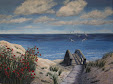
"Castaway Island Afternoon", an Acrylic Landscape Painting

     One of the many preserves in our coastal North Florida area is relatively small, but is a favorite of mine. Castaway Island Preserve is on the Intracoastal Waterway with residential neighborhoods on both sides. It's an easy drive from our home and has yielded lots of painting reference photos over several visits. Part of the preserve is salt marsh with raised walkways that allow visitors to access the wetlands. I love it there and have made several paintings from Castaway scenes; I'm sure there will be more to come.

     "Castaway Island Afternoon" is a 24" x 18" acrylic on gallery wrapped canvas, designed to be hung as is or to be framed--either way looks great. Apparently my camera was tipped a bit when I took the photos (the reason the cedars look as though they are slightly leaning toward each other). Whoops. Since I have now signed the piece and given it a protective coating (for which I use a combination of matte and gloss acrylic medium), it is more difficult to take a good photo. Now it shows a bit of a sheen in photos, so I'll be content with the one I have.

     There is more than a little artistic license taken here. The hues are punched up from the actual scene, and, as usual, I had to clear out lots of vegetation and plant debris from the exuberant growth we see in coastal North Florida. So, the initial planning of the composition was crucial and involved several tonal sketches (using a range of artist's grey-scale markers) and various arrangements of the elements in the scene. 

     I also experimented with a few possible palettes and finally chose: cerulean blue, ultramarine blue, Paynes grey, lemon yellow, yellow oxide, Indian yellow, burnt sienna, burnt umber, buff (unbleached titanium ecru), and titanium white. The result is lighter and brighter than some of my other Castaway Island paintings, such as "Castaway Island Cedars" and "Castaway Island Palms". A side note on those two: although I used the same palette and canvas size so that they could be hung as companion pieces, they have ended up apart--which is just fine, too. The smaller cedars piece turned out to be a personal favorite and hangs in our home, while the palms piece was a perfect fit for the home of our older son and his interior designer wife. I was honored when she requested the painting and happily made a gift of it.

Question of the Day: Do you have favorite places in nature that you revisit to recharge or for creative or spiritual renewal?


Saturday, January 19, 2013

Intracoastal Waterway Views Near Jacksonville, Florida

     Among our lovely wetlands and waterways here in Coastal North Florida, the Intracoastal Waterway provides a variety of views both for the boater and from the land. During an unusual warm spell last week, my friend Dee and I had a pleasant lunch to celebrate her birthday, sitting on the deck of the Ponte Vedra Beach Barbara Jean's Restaurant, situated on this waterway.


     Dee had suggested that we lunch there some nice day to enjoy the views from this waterside restaurant. A true friend, she keeps my landscape painting in mind wherever she goes and has guided me to discoveries and scenes I might not have found otherwise. 

     These photos show the bank across from us (you are looking west at the mainland from the long, narrow off-shore island on which the Jacksonville area Atlantic Ocean beaches lie). The vegetation is so thick here that it is difficult to pick out an ideal painting composition from what naturally presents itself, but every element is good background for inclusion in possible paintings. The bare cypress in the vertical photo (say hello to the osprey perched at the top) could anchor an excellent painting and provide a strong vertical and a perfect contrast to a green expanse. 

     As we ate and chatted, the tide began to run out (headed north--to our right from here) and revealed a growing beach-like area on the opposite bank that also added variety to our view. And various dead trees, stumps, and angling tree trunks serve as sculptural elements that could enrich a painting composition.


     I am grateful to Dee for showing me this area, which is markedly different from some nearby stretches of the intracoastal waterway bordered by flat, wide salt marshes (like the views in the old movie "Prince of Tides"). In other areas, thicker wooded areas include stately, centuries-old live oak trees dripping with Spanish Moss. And of course, the stretch of the intracoastal that runs straight through the heart of the city of Jacksonville, following the St. Johns River, provides boaters a completely different kind of view of tall buildings, our symphony hall and live theatre venue, along with riverside restaurants, shops, and entertainment sites.

     Just as I did the last time Dee took me on a find-some-paintings tour of some of her favorite spots, I'll let you know when any of these elements--or perhaps, a full scene--appear in a painting. 


Question of the day: Aren't observant friends, appreciative of the natural world around us, a treasure to cherish?

Thursday, December 20, 2012

Favorite Paintings Part II--Works from 2008 & 2009

     In this reflective end of the year time, we will look back today. Several months ago, I posted some of my personal favorites among older paintings and will continue that theme today. Since painting is relatively new in my life, the "oldies" don't go very far back. However, it feels as though I have learned  and grown significantly in the last 3 or 4 years and (although others may not notice a dramatic difference) can see improved elements in some more recent work. Of course, art works always have a mind of their own, so that unexpected results--for good or ill--can come along anytime. The process, the journey, and the sheer scary fun of trying are worth the ride no matter how various pieces turn out. I never fail to learn from every painting session.


     I won't repeat the background and reflections from the earlier favorites post. However, one insight from my mentor Linda Blondheim is worth recounting today. I once told her that a painting teacher had said to us students that she was sometimes ashamed of her early work and didn't like to think of the pieces people had bought back then still being on display. Linda agreed with me that the artist's feelings seemed sad and shared her own outlook. Of course, Linda has learned a great deal and grown as an artist over the years, but every time she has painted, she did the very best she could at the time. So, she is pleased if those works were appealing to buyers--or even if not--and truly values each of them. A healthy, motivating outlook, I think.


     The earliest of these three pieces is the 18" x 24" vertical creek view with the egret seen above. As the piece developed, I liked the fantasy feeling of the under painting in the streaky water and not-quite-realistic trees, so kept that aspect intact and called it "Creek Bend Fantasy". The second is the largest piece I have made so far, on a 22" x 28" canvas, called "Serenity"--also showing a creek bend where it pools. Both have garnered fans and favorable comments over several shows and in shops. The third painting, an 18" x 24" work called "Hanna Park Heron" sold at the very first Open Studio Reception in our home to friends who treasure it as a reminder both of many years of happy family outings in North Florida's Hanna Park and as a tribute to the majestic great blue heron who frequents the large pond behind their house. Descriptions of the process of creation for each piece and other details are in earlier posts; simply click on the links if interested.

     Thank you, dear readers, for your patience with my uneven posting schedule in recent months; I am recovering very well from hip replacement surgery and hope for more conversation with you in 2013. That partly depends on circumstances beyond my control; i.e., ME and my love for procrastination. I will do (some version of) my best :>). 

     May all of you enjoy a hopeful, peaceful Christmas and a joy-filled New Year.

Question of the day: Are you able to manage Linda Blondheim's positive, encouraging view of your past efforts? 

Friday, June 22, 2012

New Salt Marsh Painting--"Castaway Island Palms"

     The first of two 9" x 12" paintings I am working on from my exploration of Castaway Island Preserve might be finished. At least, it is very near finished and is ready to show you. The small palm hammock in the mid-distance across the salt marsh drew me to the scene. Paintings always take on a life of their own, and this one somehow became a bit darker and softer than my original vision, which seems fine. It hangs in my studio where I'll contemplate it occasionally to decide whether or not to make any further adjustments.


     I have been fortunate to have had the advice of two excellent painters on this piece. I began the work in Roger Bansemer's helpful two-day workshop, described in a previous post, and brought it home maybe 2/3 finished. A companion piece, also from a Castaway Island scene, got a rough start there, too--at least in its basic layout--and is now on my easel to be re-engaged.


     Linda Blondheim, my dear friend and mentor--and best painting teacher I have ever studied with--has also advised me as I worked to complete this piece. Given that she lives and works in Gainesville, Florida, a good 75 miles away from Jacksonville, our time together is limited. However, she offers an e-critique service which is extremely well-done. Periodically, I send her images of works in progress and ask questions about them. Her responses are encouraging, insightful, and precise, guiding the process without imposing her own style. She is that rare art teacher whose guidance helps students achieve their own vision to the best of their ability.


     The palette for this painting and its eventual companion piece is: ultramarine blue, cerulean blue, Indian yellow, cadmium yellow light, cadmium red, Payne's grey, buff, and white. This is the first time I have used Indian yellow, an orangy, yet not overly bright blend and enjoyed learning something of its mixing potential. Following Roger Bansemer's practice, I toned the canvas with a rub of burnt sienna before beginning. Once that is rubbed partly off, the resulting background is a mid-tone, which can help the painter judge tonal relationships as she adds first the major dark areas and then the lightest lights, and builds from there. In a departure from my usual technique, I let some of this undertone show through rather than completely covering it with full-strength paint. Handling the light in the scene was tricky, given a day that had been partly cloudy with a somewhat directionless glow and very subtle shadowing. Our weather has been unusually dry here in North Florida until recently; the marsh is undoubtedly much greener and thicker than when I last visited Castaway Island Park. I am reasonably pleased with the way this painting captures the light and mood of the day I was there.
Question of the day: Wouldn't life be sadder and poorer without compatible teachers and mentors?


Friday, May 11, 2012

Castaway Island Preserve--Another Amazing Jacksonville, Florida Park

Looking for some new reference photos for landscape painting, I recently visited the Castaway Island Preserve and found it fascinating. My photos don't fully capture its charms, I fear, but have given me much raw material for paintings. Sometimes all I need is good background information (a unique tree, a winding channel in the salt marsh, a particular bird) to meld into a composition that represents the area without copying any particular spot exactly. Although I had neglected to check the tidal schedule for the day, I was in luck to be there when the high tide was just receding. Thus, the marsh was quite wet, and birds, crabs, and other critters were active.
This wonderful small preserve includes both woodland and salt marsh ecosystems with views out to the intracoastal waterway, which runs between our off-shore beach island and the North Florida mainland in this area. We are parched for rain, unfortunately, and have some wildfires in the area. The day I explored Castaway Island, smoke hung in the air--sad to see and smell. However, I did the photo documentation I could under these conditions and have a nice packet of about 4 dozen prints to carry along with other photos to a painting workshop I will be taking this weekend. I hope to start two 9" x 12" canvases at the workshop.
In one photo, you see the dock at the end of the park area, where a woman had put a something on a line into the water (crabbing perhaps?). The intracoastal waterway is in the smoky background with a sailboat and a powerboat passing each other, going in opposite directions. Another photo shows the beginning of the path to Castaway Island (a short bridge crossing a channel in the marsh is the only clue that one is has crossed to an island). On the island part of the preserve, there are about 12 informative big boards along the main path, each one describing the life of one of the preserve's "survivor" species--other than that, the area is quite untouched. Two other photos show the wetlands, grasses, etc.--one includes a great blue heron fishing (actually blue-grey in color) which will take sharp eyes to see, even if you click on the photos to enlarge them.
For this visit, I took the paths through the salt marsh; the park provides extensive boardwalks over the wettest areas, helping to protect the natural habitat as well as making exploration convenient for the visitor. Another time, I'll explore the wooded areas further from the intracoastal. We are fortunate indeed in the Jacksonville, Florida area to enjoy a rich variety of habitats and to have many thousands of acres in these areas protected in preserves and parks.
Question of the day: Isn't it amazing how deep the creative and spiritual renewal available to us when we explore natural areas?

Wednesday, April 27, 2011

New Painting--Lyons Club Park Boardwalk on the St. Johns River

Join me on a spring walk in Lyons Club Park along the St. Johns River in Jacksonville, Florida. This new painting is nearly finished, but rather than waiting to post it, I decided to show it to you today. The revisions I still plan to make are so minor that the differences are unlikely to be noticeable in a blog photo. The piece is a 16" X 20" acrylic painting on gallery wrapped canvas, so can be hung without a frame. The scene wraps around the painted edges.
Today, I am showing you the painting and one of the reference photos I used. Next post, I will include some close-up photos of details in the painting and more information about the painting process.
You can see that I departed from the reference photo in terms of the viewpoint, the palette (colors), and some other details. The painting's viewpoint is a bit further away at a higher point along the walk by the marshy river bank.
Among the Jacksonville area's many lovely parks and preserves, Lyons Club Park is a well-kept jewel. Birds sing along wooded trails, and fish and other water creatures are abundant. We saw a number of people fishing along the bank while others paddled up to shore in canoes and kayaks. The water currents are varied and interesting as the St. Johns River runs straight north (unusual in the Northern Hemisphere) just before it turns east to flow to the ocean. We are on the east bank of the river looking north. The Trout River flows in from the west (out of sight from this view), and both rivers rise and fall with the ocean tides. So, the water is almost always in motion--sometimes lazy and sometimes powerfully choppy. Ripples and waves can run in nearly any direction, changing throughout the day, and sometimes swirling in eddies caused by the confluence of outgoing rivers meeting an incoming tide. It's a perfect place for a refreshing and renewing walk.
Question of the Day: Does your area treasure and preserve its natural habitats and beauty?

Monday, June 21, 2010

A Quick Hello and Answer to a Painting Question

I am planning some posts to answer some reader questions about my painting process. In particular, I will show you some of the stages of planning a composition, choosing a palette, and other details of preparing to create a coastal North Florida landscape painting. Artists differ greatly in their approach to the early stages of a work. For me, some time spent planning on paper helps the painting process. Believe me, I've learned that the hard way by thinking I had a workable concept and jumping in too quickly. Fortunately, acrylics allow for painting right over all the ""whoopsies" and "what was I thinking" areas. Even with careful planning, there is still a fair amount of revision as I go along with many adjustments for some of the pieces, while in other works, the plan works out more quickly and smoothly.
That's a preview to one or two posts coming soon. Today, I need to devote most of my on-line time to presenting this week's works in progress to Linda Blondheim for her e-critique services.
So, I will quickly post a photo to answer a question a few of you have e-mailed to me, "What is gallery wrap canvas?" I like the contemporary look of well-finished, unframed pieces. Some prepared canvases are stapled to their stretching boards along the sides so that a frame is necessary to cover the stapled edges. Gallery wrap canvases are more neatly stretched and are stapled to the boards on the back. I like to continue the scene right around to the sides of these canvases, as in the above photo of the autumn marsh scene. Of course, buyers who prefer framed paintings can still frame these works. But I finish the backs and wire them so that they can also be hung without a frame.
Keep those questions coming! I enjoy the conversations we have.

Saturday, June 12, 2010

Learning and Growing--Painting of a Salt Marsh

This painting, on 12" x 16" gallery wrapped canvas, has been a long time coming. I have felt stuck and put it away a few times. As I worked on it in May, it reached "near completion". Yet, I was uncertain about the best solution to a couple of issues. The foreground grasses were problematical, sometimes seeming too bland; then a change would overdo the variation in tone and color. Bland wasn't good, but I did not want the foreground to distract from the egrets (intended to be a focal point) or from allowing the viewer's eye to move about the scene. You may want to enlarge this image to get a better view of the egrets and other details.
Knowing that I would be working with my painting mentor Linda Blondheim again in June, I waited for her advice. I mentioned her e-critique service for painters in two February posts, the last time we worked together. Between her suggestions and some experimenting on my part, the piece is now in a good place. There will still be minor color adjustments with transparent glazes on the lightest grass tips and perhaps on the tree mass furthest forward on the right. These will be subtle enough that they will not show much in a photo. So, I decided to go ahead and show it to all y'all.
Although the reference photo was taken one January, that was a mild winter (unlike this year!), and the salt marsh did not look completely winter-like yet. Also, some of the color changes I made to pump up the visual interest of several areas slanted the scene toward a late autumn in look. We have hiked the wooded and marshland trails in Fort Caroline National Monument several times, both on our own and with family members visiting from other parts of the country. Every trail turn reveals new natural beauty in this park, part of an immense preserve spanning thousands of acres near the mouth of the St. Johns River here in Jacksonville, Florida.
Question of the day: Isn't it interesting how some creations seem to come together in a flash (not only for painters, but for all creative individuals), and others unfold slowly?

Saturday, May 29, 2010

Growing--Landscape Painting Experiment--Tranquil Creek Bend

I first showed you this painting about six months ago and am repeating that post for newer readers. Two photos show portions of the painting for more detail (and as always, you can click on a photo to enlarge it). Once again, the location is a spot that many people would walk by without stopping to look. A small bridge on Hogan Road crosses Little Pottsburg Creek near our home on the south side of Jacksonville, Florida. On the lookout for scenes with water features, I pulled over to explore and was especially taken with the view in one direction, where the creek widened and curved out of sight around a bend. A thickly wooded bank on one side was countered by oddly charming, spindly trees rising above bushes on the other. The trees reminded me of children experiencing a sudden growth spurt practicing in dance class, somehow combining awkwardness and grace.

This is the second painting to emerge from photos taken that day. I decided to push myself away from my favorite palette and began with a pinkish sky. Although the sky was actually a pale overcast grey, the pink tones somehow captured the bright, warm haze of that morning--the kind of light that requires sunglasses in spite of pervasive cloud cover. One painting goal was to let the sky set a certain mood and to continue experimenting with a limited palette of ultramarine blue, cerulean blue, Paynes grey, cadmium red deep, burnt sienna, yellow ochre, and white. All greens, browns, and blackish tones are mixed from these colors. The second painting goal was to try to evoke the tranquility of the moment and the feeling of mystery as the creek glided around a bend and out of sight. The reflections in the water seemed central to portraying the stillness of the scene.

As usual, pursuing the goals of this piece gave me fits along the way, and it was even more difficult than usual to decide when to stop revising and to declare the painting finished. For some reason, I continued to tinker with small details, to wish it looked a bit different (but not knowing precisely what to change), and to put it away repeatedly to pull out days later for more tinkering. Of course, this can be the ruin of a decent creation, and I finally had to exert some self-discipline and just STOP. Have you seen news features about chimps, elephants, or other non-human animals who paint amazing abstracts? One commentator remarked that the unseen co-artist is the person who pulls their work away and gives them a fresh canvas. Left to themselves, they would happily continue slapping on more and more paint--producing, presumably, a less interesting result. I can definitely relate to the chimps who might not be the best judges of when to stop painting. However this piece, now signed and finished with a light coat of medium, has been declared officially complete and has hung on our bedroom wall for a few weeks. And, as it catches my eye in lamplight or as morning brightens, it has definitely grown on me. Update since the first time I posted this: This painting and several others are now available at a lovely local shop in the San Marco section of Jacksonville, Trends Home Decor. If you visit there, you will be amazed at the variety of distinctive art, home accessories, and furniture at affordable prices.

Question: What experiences have you had with the art of knowing when to stop?

Tuesday, May 25, 2010

Exploring--A St. John's River Park in Jacksonville, Florida

I hope you enjoy seeing scenery in and around Jacksonville, Florida, because this post has more :>). Since both our super sons and their wonderful wives were busy on Mother's Day, Mark and I enjoyed a quiet afternoon. The weather was so spectacular, clear and pleasantly warm with a light breeze, that we decided to take a walk in a park we had seen only briefly before when we were house-hunting seven years ago. The Lyons Club Park (that's the way the map spells it), lies on the western edge of a point of land along the St. John's River just before this north-flowing river makes its last winding turn east to empty into the Atlantic Ocean several miles from the park. After a delightful walk, we took a peek at a second lovely park, a preserve area just across the main road on the north edge of the point. Always on the lookout for "paintable" scenes, I took some photos as we walked in Lyons Club Park. One shows typical vegetation along one of the well-kept paths. Another looks back at the way we had come, a park boardwalk along the marshy river bank. The third shows the industrial port views across the river at this point, an interesting contrast to the parks and preserves that line some of the river bank, the lucky riverfront homes, and to the city skyscrapers and urban river walk downtown. We continue to be grateful that we chose Jacksonville for our home in this semi-retirement phase of life (and beyond, we hope). The variety of wetlands, wooded areas, beaches, and extensive preserve lands--the varied habitats and ecosystems are amazing. What a super home for a landscape and seascape painter! Exploring and discovering new areas of natural beauty are an important part of creative living for us.
Question of the day: What are the best natural features of your area?

Sunday, February 7, 2010

Exploring--A Pocket Park in Jacksonville, Part II

As I considered the previous post, it struck me that although I made a point of finding a park along the St. Johns River, most of my photos were of other subjects. Here are a couple of views of Jacksonville's mighty river looking west from this pocket park. The third photo shows a live oak tree with personality and character to spare. Even though the day was overcast, the unique winter charm of our city shines through.
Question of the day: What is uniquely captivating where you are this winter?

Friday, February 5, 2010

Exploring--A Pocket Park in Jacksonville--Hunting for Painting Subjects

Yesterday, Maggie The Wonder Dog, and I took advantage of an hour of free time to go hunting for landscape painting subjects. I pulled out my trusty Jacksonville map and looked for green patches--trying to find a park we had not yet explored. The goal was not to find a grand, well-landscaped, or popular park, but rather to discover one of our wonderful city's numerous "pocket parks". All over Jacksonville, FL, small patches of preserved land hold onto nature's charm, whether they boast ancient live oak trees dripping with Spanish moss, salt marsh wetlands, or one of our countless lazy creeks, reflecting images of cypress or palm trees in murky water.
River Oaks Park shows as a curved sliver of green on the map, not far from our home on Jacksonville's south side, set along a dirty, neglected creek where it empties into the mighty St. John's River. Grand homes claim most of the land area along and near the prized riverfront, but this one small stretch of scrubby wild land has been saved from development. Perhaps it remains partly because it is anything but premium building land, with lots of squishy low spots along a muddy creek.
Since we were alone in the park, Maggie could be off leash and was in doggie heaven, tearing around on the large grassy area, sniffing interesting smelly, dank low spots, and cocking her head to discern individuals in the symphony of bird songs and calls. Although there was heavy overcast, the light was a bit too intense for ideal photography but I couldn't resist snapping away. The park is no garden spot, but is instead exactly the sort of unlikely place I discover interesting painting subjects. There were several old live oak trees on the drier grassy stretch, while the skeletons of dead cypress and many fallen trees and branches created tangled sculptures on the creek banks. Dark, still water perfectly reflected each scene in the clear light of an overcast winter day.
Can't say yet what I might paint from this outing, if anything. Even so, recalling the park's sights, sounds, and smells provides painting inspiration and these sensations will sink into my subconscious to percolate and bubble up in unexpected creative insights sometime in the future. I look forward to returning to this quirky little park some sunny late afternoon for a different perspective on the scene. Although the light was bright yesterday, the pervasive overcast created no shadows at all, and I missed them. The character-filled trees I photographed seemed to be lacking something without long shadows to attest to their dignity.
Question of the day: What unexpected source provides creative inspiration for you?

Sunday, December 20, 2009

Learning--Romanticized Creek Painting--Color Mixing and a Cerulean Blue Palette

Looking back, I realized that I had never posted this painting for you. Creek Bend Fantasy, painted several years ago, is a personal favorite--not completely sure why--just like it, that's all. As with many of my landscapes, the reference scene is a humble place that many people would pass without giving it much notice. We look from a small bridge over Hogan Road toward a bend in Little Pottsburg Creek, not far from our home. The piece is 18" X 24", acrylic on gallery wrap canvas.
The painting developed in an interesting way. The original intention was for something more direct and realistic. The resulting composition still builds on the actual scene, but is romanticized somewhat. As the painting developed in early stages, through block-in and then the truly ugly stage many pieces experience, I somewhat wildly stroked in what were intended as base colors and movement in the creek and then didn't want to completely cover them. The dark woodsy area on the left seemed sort of mysterious and fairy-like, and I also hated to lose that feeling with too much detailed development. So the result blends realism and fantasy.
The palette was based on cerulean blue and cadmium red deep, an unlikely pairing that produces some very interesting neutral purply tones. The rest of the palette consists of sap green, burnt sienna, white, and black, with very minor touches of yellow ochre and ultramarine blue. Except for brilliant flowers, I seldom use the intense colors of acrylic paints straight out of the tube. They are especially unsuitable for landscapes without some modification. Besides, mixing colors is such fun and can produce such gorgeous and surprising results. I have a number of pieces of paper and card stock on which I have played with color mixing in a whole range of palettes. Here in North Florida, we have an amazing range of colors and tones in the sky, the ocean, marshes, creeks, rivers, forests, and meadows, constantly changing with the seasons and our changeable weather. So, as long as I remember to label the paint colors I used for each set of mixes, they form a valuable reference bank for a variety of paintings.
Question of the day: Where would we be without color?

Tuesday, December 1, 2009

Growing--New Landscape Painting--Tranquil Creek Bend

This is one of my newest paintings, completed just in time for the Open Studio Reception. Two photos show portions of the painting for more detail (and as always, you can click on a photo to enlarge it). Once again, the location is a spot that many people would walk by without stopping to look. A small bridge on Hogan Road crosses Little Pottsburg Creek near our home on the south side of Jacksonville, Florida. On the lookout for scenes with water features, I pulled over to explore and was especially taken with the view in one direction, where the creek widened and curved out of sight around a bend. A thickly wooded bank on one side was countered by oddly charming, spindly trees rising above bushes on the other. The trees reminded me of children experiencing a sudden growth spurt practicing in dance class, somehow combining awkwardness and grace.
This is the second painting to emerge from photos taken that day. I decided to push myself away from my favorite palette and began with a pinkish sky. Although the sky was actually a pale overcast grey, the pink tones somehow captured the bright, warm haze of that morning--the kind of light that requires sunglasses in spite of pervasive cloud cover. One painting goal was to let the sky set a certain mood and to continue experimenting with a limited palette of ultramarine blue, cerulean blue, Paynes grey, cadmium red deep, burnt sienna, yellow ochre, and white. All greens, browns, and blackish tones are mixed from these colors. The second painting goal was to try to evoke the tranquility of the moment and the feeling of mystery as the creek glided around a bend and out of sight. The reflections in the water seemed central to portraying the stillness of the scene.
As usual, pursuing the goals of this piece gave me fits along the way, and it was even more difficult than usual to decide when to stop revising and to declare the painting finished. For some reason, I continued to tinker with small details, to wish it looked a bit different (but not knowing precisely what to change), and to put it away repeatedly to pull out days later for more tinkering. Of course, this can be the ruin of a decent creation, and I finally had to exert some self-discipline and just STOP. Have you seen news features about chimps, elephants, or other non-human animals who paint amazing abstracts? One commentator remarked that the unseen co-artist is the person who pulls their work away and gives them a fresh canvas. Left to themselves, they would happily continue slapping on more and more paint--producing, presumably, a less interesting result. I can definitely relate to the chimps who might not be the best judges of when to stop painting. However this piece, now signed and finished with a light coat of medium, has been declared officially complete and has hung on our bedroom wall for a few weeks. And, as it catches my eye in lamplight or as morning brightens, it has definitely grown on me.
Question: What experiences have you had with the art of knowing when to stop?

Wednesday, October 28, 2009

Growing--Landscape Painting Studies--Salt Marshes

These small (5" X 7") studies are based on the two salt marsh photos I posted last time. Several other photos taken that early January day also informed my interpretation of the scene on canvas. Although I love exploring and looking out over the marshes any time of the year, there is something especially tranquil and spiritual about winter marshland. Thus, these little pieces have been a joy to create. You will notice a few modifications from the actual scenes in the photos, especially some simplifications to improve the composition for this small format. When viewed next to each other, these paintings provide a panoramic view. But each can stand on its own as well.
I am working on a 12" X 16" version of the view in the study on the right. The egret is nice, but the complexity of the waterway patterns in the other study is even more appealing to me. Achieving a good tonal balance and a believable distance perspective in the larger painting have been more demanding than expected, but I hope to be able to show it to you soon.
Again, I am struck by the extent to which painting has sharpened my ability to see, to really see, the variety and complexity of nature--even in an apparently simple scene. Art instructors always say, "Paint from what you see; don't make it up," and every turn at the easel proves them right. Even when we change the scene--or even partially abstract it--working from what we think things look like instead of from the reality throws the work off. Yet, maddeningly, I sometimes find myself falling into the habit of working out of my head, even when the photos are right in front of me. The goal is continual growing and learning from each project.
For local readers, a reminder of our invitation to one and all. Mark and I would love to welcome you to our home for Harvest Delights, an Open Studio Reception Sunday, November 8, from 2 - 5 p.m. Food, drink, paintings, sustainably grown produce from our friends' farm, live piano music, and fun people--drop in and enjoy! Please scroll down to the October 10 post for address and contact information. Or email me at lemmeneslandscape@bellsouth.net with questions.
Question of the day: If you paint, sketch, take photos, or pursue any other creative outlet, do you find yourself seeing much more acutely than before--even if you have always loved nature?

Sunday, October 25, 2009

Exploring--Near Home Again--Salt Marsh Trails

I am fascinated by salt marshes--by the rolling sea of grass, by seasonal variations in the texture and color of the grasses, and by the changing patterns of land and water as the tide rises and falls. Since all the land in a marsh is fairly low, these patterns are not set; the incoming tide flows in some established channels, but also spreads in unique ways that subtly change the scenery from one day to another. These North Florida wetlands are quite different from the Michigan wetlands I grew up with and the wetlands of other places we have lived. I feel enriched to have lived in Western Michigan, the New York City/Long Island area, Southern California, greater Atlanta, Georgia, and now in Jacksonville, Florida. I am thankful for this land and for the rich variety of natural beauty near each place we have lived, as well as in the many other states we have been fortunate to explore.
We have hiked several times in the Theodore Roosevelt area of Jacksonville's vast Timucuan Preserve. A favorite trail leads to an observation platform looking out over the marsh--the views in the above photos. The trail is named after Willie Brown, a man who once lived in a small, isolated, primitive cabin (the cabin footings remain, midway along the trail) in the woodsy region on the way to the marsh. Thus, walking the trail provides two distinct types of terrain and habitat. The view from the observation platform is particularly interesting late in the day, at nesting time for the many water birds who range out from the area.
Next post I will show you two small paintings, studies for possible larger pieces, based on these and other photos from our exploration on the trail a couple of years ago. I took the photos when my sister visited from Maryland, and we explored this area together. Although we have been back since, something about the tidal patterns in photos from our first visit most strongly moved me to paint the scene. For some reason, photos from more recent visits have not struck me with the same power, even though our experience of the natural setting has been amazing every time.
You see the marsh as it looks in early January, warmed by the brown and golden tones of winter grass but yielding fewer bird sightings than in nesting season. I enjoy the lonely expanse and the limited palette of the scene in winter, which focuses my attention on the interesting patterns of the waterways as the tide begins to recede from an earlier high, exposing mud, mussel beds, and tiny scurrying crabs.
Question of the day: What natural beauty has enriched your life recently?

Wednesday, October 21, 2009

Learning and Growing--Landscape Painting, Part II

Part II of a pair of posts "back by popular demand" (see previous post for an explanation) appears today.
This painting, based on the photo in my previous post, emerged slowly. As I worked, my priorities for focus and scope changed in ways I would not have predicted. I will spare you a long description of all the twists and turns of the creative process, but will mention some of the insights and adjustments I made along the way.
First, I assembled all the reference photos taken at this bend in Little Pottsburg Creek--wider panoramas and close-up details as well as the main photo. I recalled the mild, still air, the musky, but not unpleasant, smell of the flat, muddy bank, and the colors that had danced in the sunlight and softened in shadow. I decided to incorporate some elements from other photos and to use a horizontal layout showing a greater expanse of water and some tall grasses in the foreground.
My first instinct was that the soft reddish grasses on the right would be my focal point. My husband viewed some of my thumbnail sketches along the way and was drawn instead to the taller grasses in the left foreground. Being torn among various interesting elements, I painted an adequate, but unfocused scene--too much competition for attention. My subsequent efforts to improve the composition and balance were unsuccessful, and I set the canvas aside for awhile to rest my mind by working on a small floral piece.
My painting mentor, Linda Blondheim (see her web site for beautiful paintings), suggested that she found the reddish grasses interesting as a texture contrast to the rocks I had indicated (but not featured) in the foreground. That was the trigger I needed to complete the painting--featuring an area of varied textures. Without fully realizing it, I had been captivated by the multiple textures in the scene as well, from the placid water to the jagged rocks and both soft and sharp-edged grasses. The texture contrasts on the right side of the painting, from foreground to mid-ground became the focal point, while other areas became less detailed in order to let them recede in importance. There's that matter of balance again, which keeps emerging as a theme in recent posts.
Another artist would have painted quite a different rendering. Your answer to the last post's question regarding what you would feature in this scene might be radically different as well--and wonderful in its own way. I have often heard that one must be able to truly see in order to paint. Along my creative journey, the opposite has more often been the case for me--that painting is a vehicle to enhanced seeing of what is around me. Every painting in process is a growing and learning experience to treasure.
Question of the day: What pursuit or activity is your growing edge?

Saturday, October 17, 2009

Learning and Growing--Landscape Painting, Part I

Occasionally, I will repeat a post or two that were well-received for the sake of my newer readers. I know that few of you will go back to read all previous postings. Also, frankly, this is a crazy busy time for me, and this helps me keep on my twice a week posting schedule. Today's entry is the first of two about this scene on Little Pottsburg Creek. Please excuse me, fellow bloggers if I am not able to visit and comment on all of your wonderful blogs as often as I would like for the next few weeks. I'll be back full-force before too long.

Landscape painting is a balancing act and requires priority setting and focus. I have written about balancing life goals and projects before, and have realized that a similar balancing process goes into the decisions involved in painting.
Few, if any, painters copy what they see in exact detail. We must discern what aspects of a particular scene drew us in and feature them. Other aspects need to recede in importance or even be left out. Sometimes an element needs to be moved or added for the sake of the composition. However, such changes require restraint. If a weathered barn is surrounded by purple wildflowers except for a trash pile in my sight line, filling that area with similar or compatible plants or a glimpse of bare earth is an acceptable adjustment to enhance the overall scene. However, it wouldn't make sense to paint a profusion of tropical passion flowers or cacti instead. The integrity of the location matters. Now I know that some lovely landscape paintings are completely "made up" by the painter from some combination of memories and a desire to create a scene that looks a particular way. I have done that myself, with fairly good results.
However, the "made up" places, at least when I paint them, do not resonate with the same depth as those based on an actual location. If I have truly been there, have seen, heard, tasted, smelled and touched the natural elements, I believe the truth of that experience shows in the art work. Yet, I do not paint simply what I see with my eyes or experience with my other physical senses. The painting arises out of my personal response to a natural place.
Holding the real and the "ideal" mental vision in tension to produce an interesting painting of an observed scene is infinitely rewarding. Sometimes this is quite difficult and requires extensive adjustment along the way--at other times, the process flows more easily. Wrestling with the balance of light and dark tones, with the way colors appear under variations in natural light, and with the arrangement of shapes and elements is a deeply moving, uniquely personal, creative experience.
The scene in the photo above is near our home. It's no place special--definitely not on anyone's sight-seeing itinerary--just a wide bend in Little Pottsburg Creek. Chunks of old concrete jostle the rocks and mussel beds in the muddy shallows, and trash lies half-submerged in the water. Still, something in the scene drew my attention. So I carefully recorded details mentally, snapped a few photos, and went home to figure out what the appeal was. If I tried to capture the feeling I had experienced in this everyday North Florida location, what would I paint? The result was an excellent learning exercise for me, which I will show you in my next post.
Question of the day: If you painted, drew, or more carefully photographed this creek bend, what would you feature?

Sunday, September 27, 2009

Exploring & Growing--The Refreshment of a Different Point of View

When our sons were Sesame Street age, I sometimes watched that wonderful show with them. One delightful piece I still remember featured video of a variety of creatures and a catchy song, each chorus ending with the claim, "It all depends on where you put your eyes." The camera gave us glimpses of the world as it may look to a giraffe, for example, contrasted with the way it may look to many other critters with eyes at radically different levels.
Strangely, that song has popped up in my mind several times in recent days. What's that about? Is my subconscious trying to tell me something about my perspectives, goals, or viewpoint? If it is, I will do my best to listen and learn from it.
I have posted in the past about our love for walks on the beach. We are grateful to live near the mighty Atlantic Ocean and enjoy the many moods of the waves and weather there. Somehow, our little Shih-tzu, Magnolia, who is too short to see much out the car windows, always knows when we are crossing the bridge over the intracoastal waterway. Her excitement builds as we drive on the offshore island side of the bridge where the pavement is wavy and gives us a mini-roller coaster ride. We both anticipate our beach time with joy.
However, I also love the distinctive and varied salt marshes in the Jacksonville area and enjoy contemplating the stretch of golden, green and/or brown (depending on the season) marsh grasses visible from the bridge. When the tide is low, more water birds are poking around among the mussel beds and crab holes; when it is high, more fishing boats congregate.
One fine day on our way home from the beach, I decided to explore the neighborhood closest to the marsh on the mainland side and made a sharp right turn just off the bridge. When I could see through to the marsh between yards, fences, and old trees, I had a whole new perspective on the bridge, marsh, and intracoastal waterway. The photo above is one view this lovely area provided.
So, as the Sesame Street song continues to invade my reflections, I recalled this experience, which struck me as a metaphor for the richness available in life--depending on where I put my eyes. Don't have anything profound to say about that just now, but I'll keep on looking and listening.
Question of the day: Where are your eyes these days? Have you recently found a new perspective, are you hopeful for a change in viewpoint, or is your outlook just right for this time in life?

Wednesday, September 23, 2009

Learning & Growing--Art Classes & Cypress Swamp Painting

I recently showed you a painting of an iris, adapted from a reference photo taken by someone else and wrote about some of the difficulties I encountered. Well, I have done it before. Today's painting, of a cypress swamp (or marsh), is also adapted from someone else's photo, this one from a nature magazine. I am sorry that I cannot credit the photographer (even though my rendering is quite different from the photo). Since this painting was mostly completed in a painting class using reference material the instructor provided, I no longer have information on the photo or the magazine. Given the strong dark tones and bright contrast in this painting, I hope that it looks something like the real thing on your monitor (it is a bit too yellow on mine).
My landscape painting mentor and friend, Linda Blondheim, is an excellent teacher, both tough and sensitive. She listens to her students' expression of what they would like to achieve in a painting and (if that vision is achievable) helps them get there--a rare teaching gift. Looking at this cypress swamp piece reminds me of the enriching day and growth as an artist I experienced in a design and composition workshop with her a few years ago. By the way, all the best artists I know are self-described learners and are continually pushing themselves to grow and to achieve new directions and goals.
I was privileged to study with Linda again recently at a full day workshop learning about using values well in the landscape ("values" in art refer to the whole range of darks to mid-tones to lights). I know that this is one area in which I need improvement--I get so taken up with the brilliance or the subtlety of colors in nature that it is difficult for me to judge values sometimes or to balance them in an interesting way in a composition. Among other topics, she introduced the Notan system for making values "sing" in our work. It was especially meaningful to work with her earlier this month because her schedule requires her to stop in-person teaching for a time, and I am thrilled I could be in her final workshop (for now--all her students hope that she will return to teaching in the future).
For anyone who would like painting instruction from Linda, she is continuing on-line teaching, both individual and class instruction, and her e-classes are excellent. In fact, her next class unit will be an expanded version of the one-day values workshop I experienced. For more information, go to HER WEBSITE and click on "artist resources" at the top.
Even if you are not looking for painting classes, her remarkable paintings and fascinating articles about her beloved North Florida, its history, farms, ranches, wetlands, and preserves are well worth a visit to that website (click on the link above). If you think all of Florida looks like Miami or the Gulf Coast, you will be amazed to see the paintings her lifetime of exploring has inspired.
Now, about the above painting, an acrylic on a 9" X 12" canvas panel from a workshop with Linda a few years ago. Like many of my accounts of the painting process, the story of this piece is a tale of mistakes along the way and hurdles overcome. The basic composition, under-painting, and some of the finishing were complete by the time I left the workshop. Under Linda's guidance, it was looking fairly good then. Linda had scanned a good quality copy of the magazine photo for me to bring home as i completed the scene, but I had difficulty getting it to look real. Finally, an insight struck as I studied the copy of the photo for the millionth time. The photographer either had used flash or had other additional lighting on the stumpy cypress knees in the foreground so that there was a combination of natural back lighting and dramatic light falling on the foreground. Although that made for a striking photograph, trying similar tones in my painting made the scene look phony. Softer, mid to dark tones in the foreground made a real improvement.
Question of the day: What is your current growing, learning edge?